I do this too.
I'm not asking you to do anything I haven't spent years learning, testing and living myself.
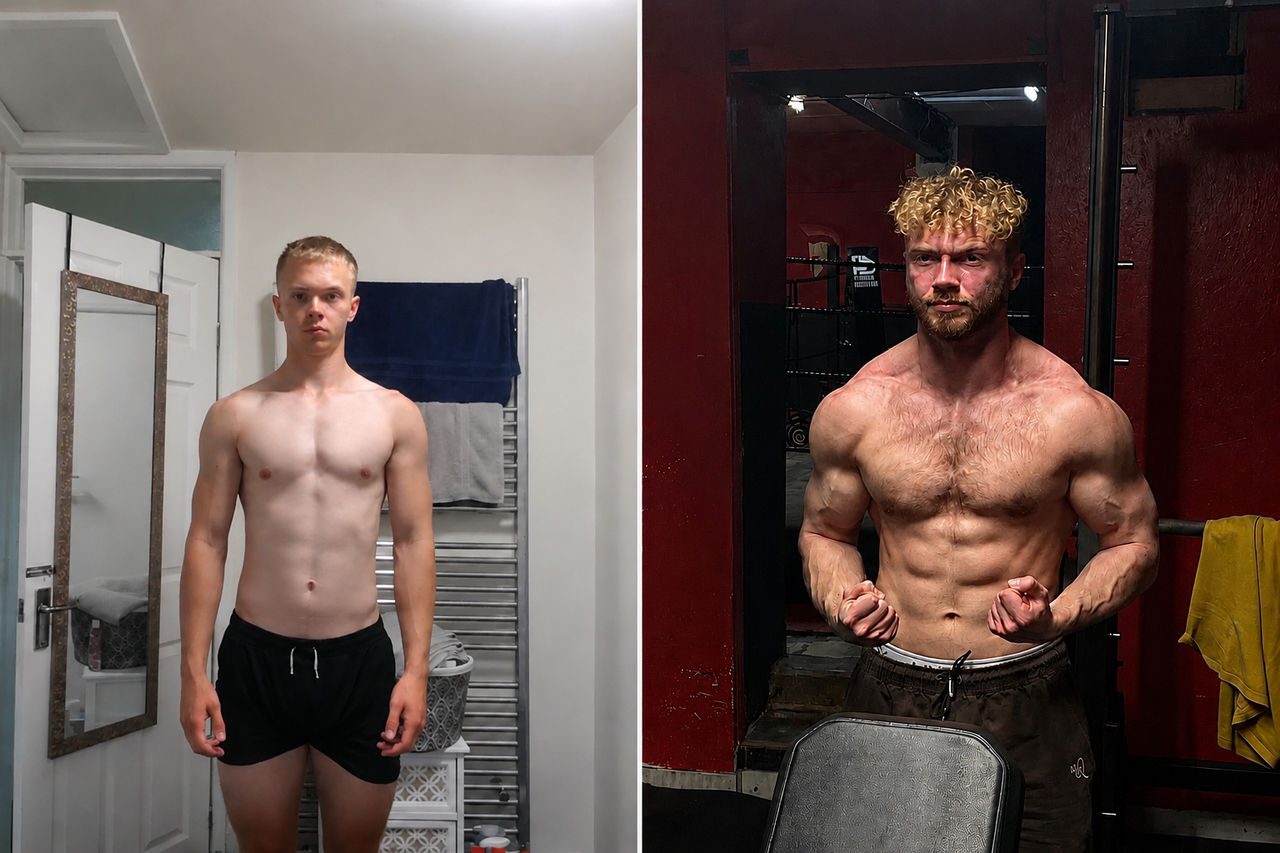
6 years between these photos. Different habits. Different thinking. Different skill stack.
The body changed because the person changed first.I was never interested in collecting workout plans.
I wanted to understand why two people could follow the same advice and get completely different results. That question took me through sports science, nutrition, psychology, behaviour change, psychoneuroimmunology, physiology and hundreds of hours of independent research.
But the biggest lesson didn't come from a textbook. It came from coaching.
After working with a client for nearly three years, they eventually dropped out — not because they lacked motivation, but because I realised I'd been solving the wrong problem. They didn't need more accountability. They needed different skills.
That moment completely changed how I coach. Instead of asking people to "be more disciplined," I started building a system that identifies which skill someone is actually missing, then teaches that skill before moving on. That became the Skill Stack.
Education and experience.
Coaching, not just programming.
The Diagnosis
Every client starts with a behavioural diagnostic — not because labels matter, but because different people fail for different reasons. We identify what's actually getting in your way before writing a plan.
The Method
We don't chase motivation. We build skills. Each phase develops one capability at a time — from consistency to nutrition, training, emotional regulation and autonomy. We only progress when the evidence says you're ready.
The Decisions
You don't need to constantly wonder whether you're doing enough. Every week I review your check-in data and decide whether we progress, simplify, maintain, or recover. Coaching becomes a series of informed decisions instead of emotional guesses.
The Relationship
Life happens. Stress happens. Injuries happen. I don't expect perfect adherence — I expect honest communication. Sometimes I'll push you. Sometimes I'll deliberately slow you down. The goal isn't perfect weeks. It's building a system that still works during imperfect ones.
How I think about fitness.
I've never been satisfied with simply knowing that something works. I've always wanted to understand why it works.
That curiosity is what first drew me into sports science, but it didn't stop there. It led me deeper into nutrition, psychology, physiology, behaviour change and psychoneuroimmunology — not to collect qualifications, but to better understand why lasting change seems easy for some people and frustratingly difficult for others.
Over the years, that way of thinking has shaped everything I do as a coach. Rather than relying on generic programmes or motivation, I've built systems that help uncover what's actually stopping someone from progressing. Every framework, diagnostic, check-in and coaching process exists for one reason: to make lasting behaviour change more understandable, more measurable and more reliable.
I don't believe people fail because they lack discipline. More often, they're trying to solve the wrong problem. The challenge isn't usually finding a better workout or a stricter meal plan. It's identifying the missing skill that's preventing consistency in the first place — and developing that skill before moving on.
"I'm not interested in handing out programmes and hoping people stick to them. I'm interested in understanding how you think, how you make decisions, what repeatedly gets in your way and what skills will create lasting change for your specific situation."
My goal isn't to make you dependent on me. It's to build a coaching system that gradually makes you more capable, more confident and more self-sufficient — until you understand yourself well enough to make good decisions without needing someone looking over your shoulder.
Because lasting results don't come from following instructions forever. They come from becoming the kind of person who knows what to do, understands why they're doing it and can adapt when life inevitably changes.
What makes my coaching different.
I coach systems, not streaks.
Most people think consistency means never missing. I don't. Real consistency is knowing how to restart. That's why we spend as much time learning recovery skills as we do building habits.
I coach the person, not the programme.
Your programme changes. Your work changes. Your energy changes. Your life changes. The coaching adapts with you.
I want you to need me less over time.
The goal isn't lifelong dependence on a coach. The goal is becoming someone who understands themselves well enough to make good decisions without needing constant accountability. That's success.
When I'm not coaching.
When I'm not coaching you'll usually find me learning. I enjoy testing ideas on myself before recommending them to anyone else. Whether that's strength training, endurance events, striking practice, behaviour change, nutrition or recovery, I like understanding how things work — not just whether they work.
I'm fascinated by the overlap between physiology and psychology because that's where lasting change happens. Coaching isn't something I switch on during working hours. It's how I naturally think.
Is this right for you?
This is for you if...
- You've lost weight before but couldn't maintain it.
- You've started over more times than you can count.
- You like understanding why you're doing something.
- You want a coach who adapts rather than blames.
- You want to build habits that still work when life gets messy.
- You care more about keeping results than chasing them quickly.
Probably not for you if...
- You're looking for a six-week transformation.
- You want someone to simply tell you what to do.
- You're unwilling to reflect honestly each week.
- You're chasing perfection instead of progress.
- You expect motivation to solve everything.
A few things I believe.
"Most people don't have a discipline problem. They have a skill gap."
The purpose of coaching isn't to make you depend on me. It's to help you become the kind of person who can trust themselves.